FREE Case Evaluation: 1-888-887-3117

Contact

Cracking the Code: Understanding CPAP Lawsuit Mass Tort Case Leads and Their Value

Cpap lawsuit mass tort case leads: Maximize 2024 Value

Why Understanding CPAP Lawsuit Mass Tort Case Leads Matters Now

CPAP lawsuit mass tort case leads are potential clients who may have a claim against Philips Respironics for injuries caused by recalled CPAP, BiPAP, or ventilator machines containing defective PE-PUR foam. Key qualifying factors include:

What Makes a Valid CPAP Lead:

  • Used a Philips device manufactured between 2009-2021
  • Developed qualifying health conditions (cancer, respiratory illness, kidney damage)
  • Can document device usage and medical diagnosis
  • Falls within the statute of limitations for their state

Current Settlement Status:

  • $1.1 billion settlement reached in 2024 for personal injury claims
  • Initial payouts of $5,000-$20,000 began in August 2025
  • 829 cases pending in MDL 3014 as of June 2025
  • Additional Extraordinary Injury Fund available for severe cases

In June 2021, Philips recalled millions of devices due to degrading sound-dampening foam. The FDA issued a Class I recall—the most serious type—because the foam could release toxic particles and carcinogenic gases, which users might inhale or ingest.

The scale is staggering, with nearly 600,000 devices distributed to veterans alone. The FDA has received over 90,000 adverse event reports, including 260 reports of death, making this one of the largest medical device mass torts in history.

For law firms, this litigation represents a significant opportunity to help injured people seek justice. Success requires understanding how to identify, qualify, and serve these potential clients effectively.

I'm Tim Burd, CEO of Mass Tort Strategies and Justice Hero. My team specializes in connecting people who qualify for medical mass torts, like the Philips CPAP case, with the right legal representation. We have proven systems for identifying and qualifying legitimate CPAP lawsuit mass tort case leads.
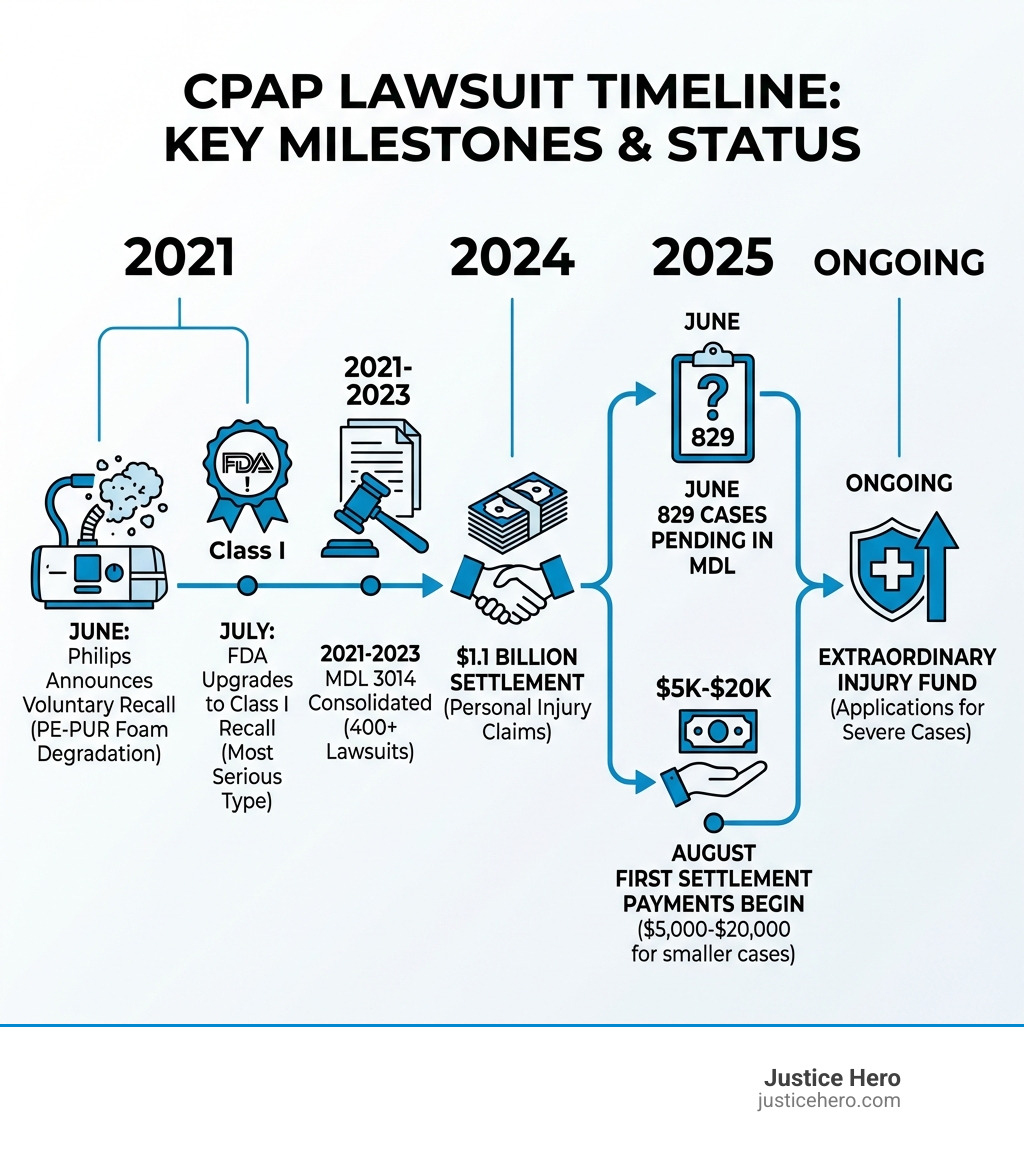
Infographic showing the CPAP lawsuit timeline: June 2021 - Philips announces voluntary recall of millions of CPAP devices due to PE-PUR foam degradation; July 2021 - FDA upgrades to Class I recall; 2021-2023 - Over 400 lawsuits consolidated into MDL 3014 in Western District of Pennsylvania; 2024 - Philips agrees to $1.1 billion settlement for personal injury claims; August 2025 - First settlement payments begin ($5,000-$20,000 for smaller cases); June 2025 - 829 cases still pending in MDL; Ongoing - Extraordinary Injury Fund applications for severe cases - cpap lawsuit mass tort case leads infographic

Explore more about cpap lawsuit mass tort case leads:

The Philips CPAP Litigation: A Foundation for Case Leads

Securing CPAP lawsuit mass tort case leads begins with understanding the underlying legal battle. This isn't just about a faulty product; it's about a medical device that became a source of harm for millions.

The Core Issue: PE-PUR Foam Degradation

The Philips CPAP recall stems from the polyester-based polyurethane (PE-PUR) sound abatement foam used in its devices. Intended to reduce noise, the foam was prone to degradation, especially in heat and humidity. This foam could break down into black particles and release toxic gases (off-gassing), which users could then inhale or ingest while sleeping.

The FDA classified this as a Class I recall, the most serious type, indicating a significant risk of severe injury or death. The foam released toxic and potentially carcinogenic Volatile Organic Compounds (VOCs), including toluene diamine and diethylene glycol. This represents a critical design flaw where a medical device caused serious illness. Learn more about the dangers of Toxic Exposure.

A central point in the litigation is the allegation that Philips knew about the foam degradation as early as 2015 but delayed warning the public until the June 2021 recall.

Reported Injuries and Health Risks

Inhaling or ingesting the degraded PE-PUR foam has been linked to a wide range of severe and life-threatening injuries.

Respiratory system - cpap lawsuit mass tort case leads

Reported health risks include:

  • Cancer: Various cancers, including lung, head, neck, and blood cancers (leukemia, lymphoma), are linked to the foam's carcinogenic byproducts. See our CPAP Lawsuit Cancer Complete Guide.
  • Respiratory Illnesses: New or worsening asthma, bronchitis, pneumonia, pulmonary fibrosis, and other serious respiratory conditions.
  • Lung Damage: Inhaled particles can cause lung nodules, scarring, and impaired function.
  • Kidney and Liver Damage: Toxic chemical exposure has been linked to kidney and liver disease or failure.
  • Other Symptoms: Headaches, dizziness, irritation of the eyes, nose, and throat, and chest pressure.

The FDA has received over 90,000 medical device reports related to the foam issue, including 260 reports of death, underscoring the recall's severity.

The recall affects millions of devices manufactured between 2009 and 2021, including:

  • A-Series BiPAP A30
  • A-Series BiPAP A40 (ventilator)
  • A-Series BiPAP Hybrid A30
  • DreamStation ASV
  • DreamStation ST, AVAPS
  • SystemOne ASV4
  • C-Series ASV
  • C-Series S/T and AVAPS
  • OmniLab Advanced+
  • SystemOne (Q-Series)
  • DreamStation CPAP, Auto CPAP, BiPAP
  • DreamStation Go CPAP, Auto CPAP
  • Dorma 400, 500 CPAP
  • REMstar SE Auto CPAP
  • Trilogy 100 Ventilator
  • Trilogy 200 Ventilator
  • Garbin Plus, Aeris, LifeVent Ventilator
  • BiPAP V30 Auto Ventilator

If you used one of these devices and developed health problems, consult with medical and legal professionals.

Litigation Status: MDL and Major Settlements

The thousands of lawsuits filed against Philips have been consolidated into a Multidistrict Litigation (MDL 3014) in the Western District of Pennsylvania. An MDL streamlines pretrial proceedings for complex cases with common facts. As of June 2025, 829 cases were pending in the MDL.

Unlike a class action, each plaintiff in an MDL retains an individual lawsuit, allowing for compensation based on their specific injuries. The process simply centralizes findy and pretrial motions for efficiency.

In 2024, Philips agreed to a $1.1 billion settlement for personal injury claims. This includes $1.075 billion for injury and death claims and $25 million for medical monitoring. A separate settlement addresses economic losses, like device replacement costs. Initial personal injury payouts of $5,000-$20,000 began in August 2025, with an Extraordinary Injury Fund (EIF) available for more severe cases.

While these settlements are significant, many cases remain. Bellwether trials, or test cases, expected in 2025 will help guide future resolutions. We monitor these developments on our CPAP Lawsuit Update and CPAP Lawsuit Settlement Complete Guide pages.

Generating and Qualifying CPAP Lawsuit Mass Tort Case Leads

For law firms, effectively generating and qualifying CPAP lawsuit mass tort case leads is paramount to connecting injured individuals with the legal representation they deserve.

Effective Marketing Strategies for CPAP Lawsuit Mass Tort Case Leads

Acquiring high-quality leads for a mass tort of this scale requires a multi-faceted strategy to reach potential claimants with clear, compassionate messaging.
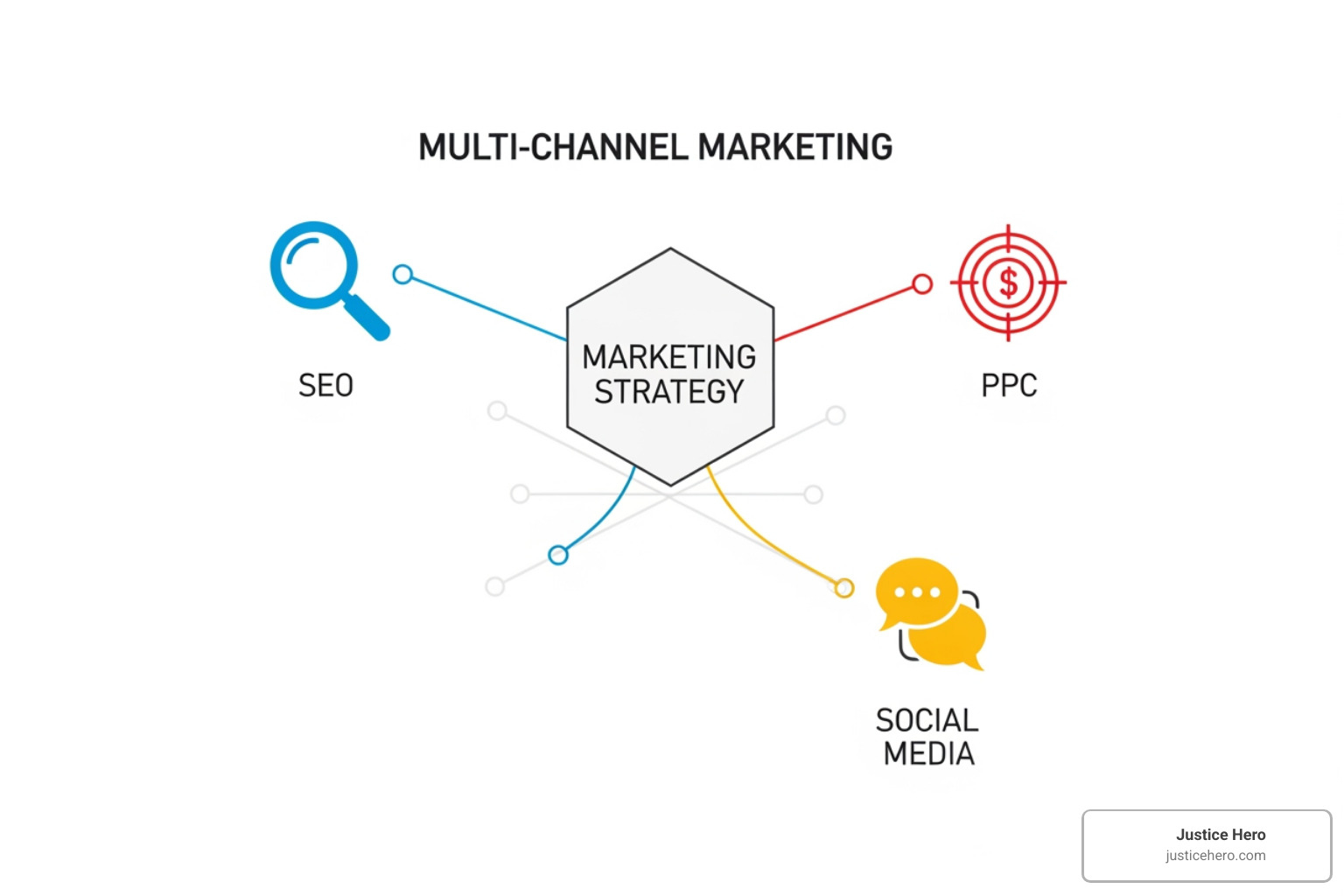
Multi-channel marketing diagram with SEO, PPC, and Social Media icons - cpap lawsuit mass tort case leads

Key marketing strategies include:

  • Search Engine Optimization (SEO): We ensure that individuals searching for terms like "CPAP lawsuit" or "Philips CPAP recall" find our resources. This involves content optimization and authority building so those actively seeking help can connect with legal experts.
  • Pay-Per-Click (PPC) Advertising: PPC campaigns on search engines provide immediate visibility, targeting specific keywords to reach individuals actively researching their legal options.
  • Social Media Campaigns: Targeted campaigns on platforms like Facebook educate users about the recall, health risks, and their legal rights, encouraging them to seek help.
  • Content Marketing: Creating valuable content like articles, videos, and FAQs explains the lawsuit in simple terms, building trust and helping potential clients understand their situation.
  • Targeted Outreach: We work with medical communities and patient advocacy groups to reach affected individuals who may not be searching online.
  • Data-Driven Optimization: We analyze campaign performance to refine strategies, optimize spending, and generate the most effective CPAP lawsuit mass tort case leads.

This multi-channel approach ensures comprehensive coverage. Staying informed on Mass Tort Litigation News helps us tailor our strategies.

The Intake Process for CPAP Lawsuit Mass Tort Case Leads

Once a potential lead expresses interest, a thorough and empathetic intake process is critical. We gather essential information to screen for eligibility and ensure individuals meet the criteria for a claim.

Our intake specialists are trained to:

  1. Gather Crucial Details: Collect the claimant's medical condition, specific Philips device model, duration of use, and alleged injuries.
  2. Verify Device Usage: Confirm use of a recalled device by checking serial numbers, purchase dates, or other documentation.
  3. Document Proof of Injury: Help individuals gather necessary medical records, diagnostic results, and physician statements to support their claim.
  4. Assess Statute of Limitations: Evaluate whether a potential claim falls within the state-specific deadline for filing a lawsuit.
  5. Communicate with Compassion: Listen to callers' stories with sensitivity and confidentiality, creating a supportive environment during a difficult time.

This meticulous process screens and qualifies leads according to law firm protocols, helping identify Who Qualifies For CPAP Lawsuit.

The Role of Intake Services and Call Centers

The high volume of inquiries in a mass tort like the Philips CPAP case can overwhelm a law firm. Specialized intake services and call centers act as a professional first point of contact, ensuring no lead is missed.

Key benefits of our intake services include:

  • 24/7 Availability: A dedicated call center provides around-the-clock support, allowing potential clients to reach out at any time.
  • Specialized Screening: Our agents are trained on CPAP lawsuit nuances to conduct precise initial screenings and filter out unqualified leads.
  • Data Management: We use sophisticated systems to collect, organize, and securely store client data, often integrating with a firm's CMS.
  • Compliance: We adhere to all relevant regulations (TCPA, CCPA, GDPR), protecting both the client and the law firm from legal risks.
  • Scalability: An intake service can quickly scale operations to meet fluctuating lead volume, providing flexibility and cost-effectiveness.
  • Positive Client Experience: A professional and empathetic first impression creates a positive experience for potential clients from the start.

Partnering with an experienced intake service allows law firms to focus on litigation, knowing their potential clients are handled with care and efficiency, streamlining the Mass Tort Claim Process.

Understanding the legal and financial nuances of the Philips CPAP litigation is key for both plaintiffs and law firms evaluating CPAP lawsuit mass tort case leads.

Mass Tort vs. Class Action: Key Differences

Mass torts and class actions are often confused, but they are distinct legal actions with different implications for plaintiffs.

Feature Mass Tort Class Action
Individual Lawsuits Each plaintiff files an individual lawsuit. A single lawsuit represents a group of plaintiffs.
Damages Individualized damages based on specific harm. Damages are typically shared equally or proportionally among class members.
Plaintiff Control Greater individual control over the lawsuit and settlement decisions. Less individual control; decisions made by lead plaintiffs and class counsel.
Injuries Diverse, individualized injuries. Similar injuries suffered by a large group.
Legal Strategy Focus on individual causation and damages. Focus on common questions of law and fact.

The Philips CPAP litigation is an MDL, a type of mass tort. While cases are consolidated for pretrial efficiency, each plaintiff's lawsuit remains individual. This allows for:

  • Individualized Damages: Compensation is based on each person's specific injuries, medical costs, and lost wages, ensuring fairer outcomes for those with more severe harm.
  • Plaintiff Autonomy: Individuals retain more control over their case and settlement decisions.
  • MDL Efficiency: The process efficiently handles findy and motions common to all cases while preserving the individual nature of each claim.

Learn more in our guide on Mass Tort vs Class Action.

Potential Compensation for Plaintiffs

Individuals injured by recalled Philips CPAP machines may be entitled to significant compensation to cover their losses.

Potential compensation in a CPAP lawsuit can include:

  • Medical Expenses: Coverage for past and future medical care, including treatment, surgery, medication, and rehabilitation.
  • Lost Wages: Compensation for lost income and reduced future earning capacity due to the injury.
  • Pain and Suffering: Compensation for physical pain, emotional distress, and loss of enjoyment of life.
  • Loss of Consortium: A spouse may claim damages for the loss of companionship and support resulting from the injury's impact on the marital relationship.
  • Punitive Damages: May be awarded to punish the defendant for egregious conduct, such as knowingly delaying the recall, and to deter future misconduct.
  • Medical Monitoring: A $25 million fund from the settlement covers the cost of ongoing health surveillance to detect future health issues early.

The $1.1 billion settlement demonstrates Philips' significant liability. While initial payouts are modest, an Extraordinary Injury Fund exists for severe injuries. Learn more on our page about How Much Will I Get From CPAP Lawsuit.

Risks and Benefits of Partnering with Lead Generation Services

For law firms, partnering with a specialized lead generation service for CPAP lawsuit mass tort case leads can be a game-changer, but it involves both benefits and risks.

Benefits:

  • Access to Qualified Leads: Specialized services save firms time and resources by identifying individuals who meet specific lawsuit criteria.
  • Scalability: Services can quickly scale campaigns to generate high lead volumes, allowing firms to grow their caseloads efficiently.
  • Expertise: Lead generation services understand mass tort marketing nuances, including compliance (TCPA, CCPA) and ethical advertising.
  • Cost-Effectiveness: The return on investment (ROI) can be substantial when acquiring vetted, qualified potential clients.
  • Validation: Top-tier services invest in validating claimant information to protect firms from fraudulent leads.

Risks:

  • Cost Per Lead: Firms must evaluate the cost per lead against the potential case value to ensure a positive ROI.
  • Lead Quality: Quality varies between providers. Firms must vet partners to ensure they receive high-quality, qualified leads.
  • Exclusivity: Exclusive leads are highly beneficial but cost more than non-exclusive leads, which can create competition.
  • Ethical Standards: Ensure partners adhere to the highest ethical standards to avoid reputational damage or regulatory problems.

A successful partnership requires transparency, clear communication, and a shared commitment to ethics. Our Mass Tort Lawyer California Guide offers more insights.

Frequently Asked Questions about CPAP Lawsuits

We understand that mass tort litigation can be complex. Here, we address some of the most common questions about CPAP lawsuits.

How long will it take to resolve a CPAP lawsuit?

Resolving a CPAP lawsuit typically takes years, not months. Mass torts against large corporations involving medical devices are inherently complex and lengthy.

Factors affecting the timeline include:

  • The MDL Process: This involves extensive findy, expert witness testimony, and numerous legal motions.
  • Bellwether Trials: These test cases help both sides gauge arguments before a global settlement is reached, but they take time to prepare.
  • Settlement Negotiations: Negotiating a comprehensive settlement for thousands of plaintiffs is a lengthy process.
  • Individual Case Processing: After a master settlement, each case must still be evaluated based on its specific injuries and evidence.

While a $1.1 billion settlement was reached in 2024, many cases are still pending. Your specific timeline depends on injury severity, documentation, and the litigation's pace. Learn more in our guide on How Long Will CPAP Lawsuit Take.

How can I determine if I am eligible to file a CPAP lawsuit?

To determine if you are eligible for a CPAP lawsuit mass tort case, you generally must meet the following criteria:

  1. Used a Recalled Philips Device: You must have used a Philips CPAP, BiPAP, or ventilator included in the June 2021 recall.
  2. Suffered a Qualifying Injury: You must have been diagnosed with an injury linked to the foam, such as cancer, a serious respiratory illness, or kidney/liver damage.
  3. Injury Occurred After Use: Your diagnosis must have occurred after you started using the recalled device.
  4. Have Documentation: You need medical records confirming your diagnosis and proof of device usage (e.g., receipts, prescriptions).

The best way to confirm your eligibility is to consult with an experienced attorney who can review your specific circumstances and provide a clear assessment.

What are the main allegations against Philips in these lawsuits?

Lawsuits against Philips are based on several key legal allegations that establish the company's responsibility for the harm caused by its devices.

The main allegations include:

  • Defective Design: The devices were defectively designed with PE-PUR foam known to be prone to degradation.
  • Failure to Warn: Philips allegedly failed to warn consumers and doctors about the foam's risks, despite knowing about the problem years before the recall.
  • Negligence: Philips failed to exercise reasonable care in the design, manufacturing, and testing of its devices.
  • Fraudulent Concealment: Philips is accused of knowingly hiding information about the foam's health risks from the public.
  • Breach of Warranty: Philips breached warranties that its devices were safe and fit for their intended purpose.

These claims fall under product liability law. The volume of injuries and the FDA's Class I recall lend significant weight to these allegations. Learn more in our Product Liability Guide.

Conclusion: The Enduring Value of High-Quality CPAP Case Leads

The Philips CPAP litigation represents a significant area of mass tort law, creating a substantial need for qualified CPAP lawsuit mass tort case leads. As the legal process unfolds, law firms that effectively identify and connect with injured individuals play a crucial role in securing justice. Understanding the nuances of the case, from the PE-PUR foam to the intricacies of lead generation and intake, is paramount for success. For those affected, and the legal professionals who serve them, staying informed is the first step toward accountability. Justice Hero provides resources to help steer these complex legal challenges. Learn more about the CPAP Lawsuit.

On This Page

Case Status:

Defendants:

Injuries:

envelopephonemap-markercrossmenu