FREE Case Evaluation: 1-888-887-3117
The cpap settlement is one of the largest medical device resolutions to date, with Philips agreeing to pay about $1.7 billion to resolve claims tied to recalled sleep apnea machines. Here's what matters most:
Key Settlement Details:
Who's Affected:
Health Risks Involved:
The recall stems from sound-dampening foam that can break down and release toxic particles and chemicals into users' airways, posing risks such as cancer, respiratory issues, and organ damage.
Understanding your options early helps you secure the best possible outcome.
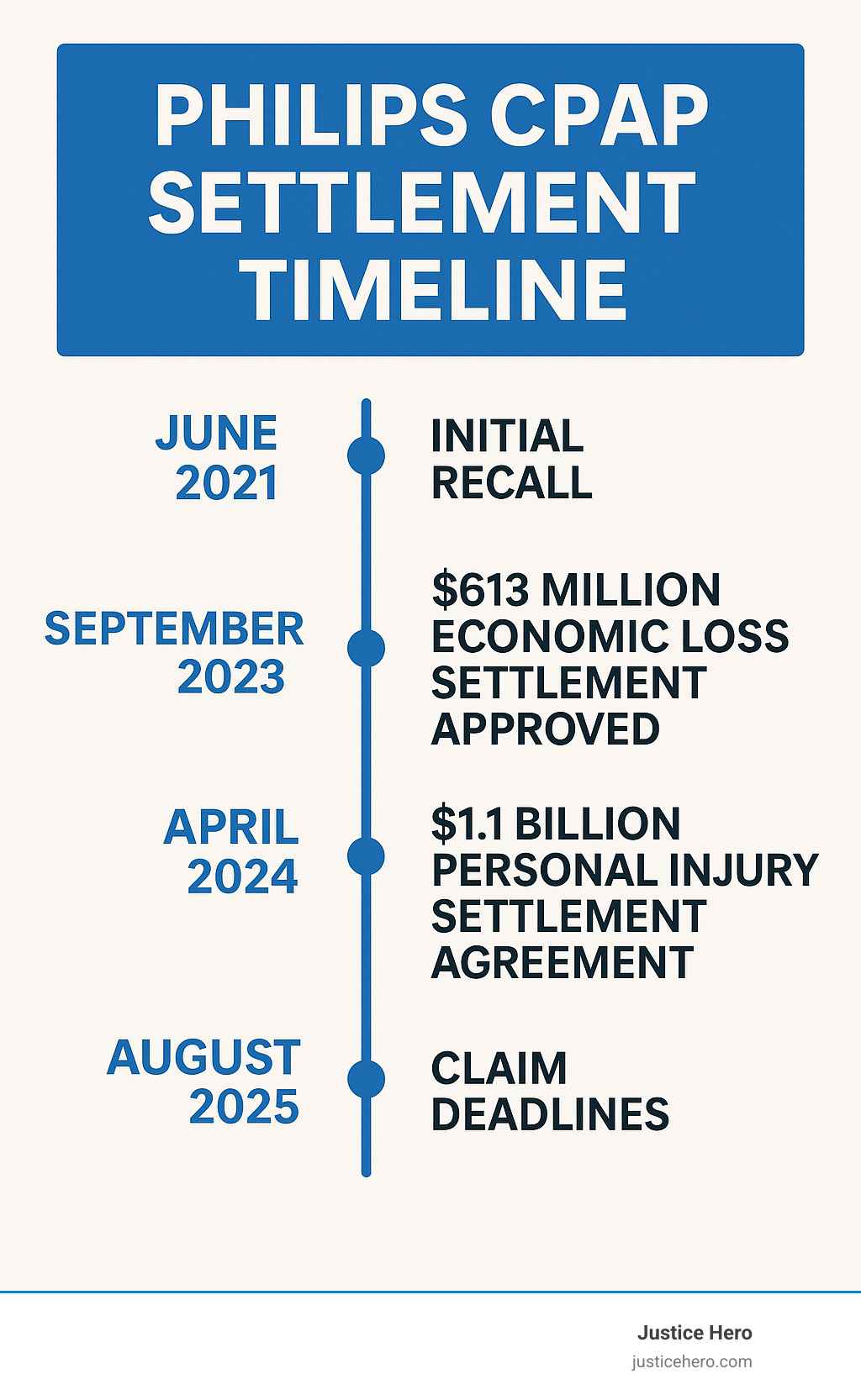
Terms related to cpap settlement:
In June 2021, Philips Respironics recalled millions of its CPAP, BiPAP, and ventilator devices due to a critical design flaw. The polyester-based polyurethane (PE-PUR) sound abatement foam used in the machines was found to degrade over time, posing significant health risks to users.
The degradation of the PE-PUR foam can lead to black pieces of foam or harmful chemicals, including volatile organic compounds (VOCs), entering the device's air pathway. This means that with every breath, users could be inhaling or ingesting these toxic particles and gases. The U.S. Food and Drug Administration (FDA) quickly classified this as a Class I recall, their most serious type, indicating that there is a reasonable probability of serious adverse health consequences or death. As of June 2023, the FDA had received over 105,000 medical device reports (MDRs) related to problems with these devices, including 385 reported deaths.
The FDA's investigation into the foam found that it could degrade due to factors like heat and humidity, and even more rapidly when exposed to ozone cleaning products. You can dig into The FDA's investigation into the foam for a deeper understanding of their findings. The core issue wasn't just physical particles; the release of VOCs from the degrading foam introduced a chemical hazard, potentially leading to a range of severe health problems. Many users are concerned about the long-term effects, especially regarding cancer. If you're worried about this, we have more information on CPAP Cancer.
The health risks associated with inhaling or ingesting degraded PE-PUR foam and its chemical byproducts are alarming and varied. Users have reported both short-term and potentially life-threatening long-term conditions.
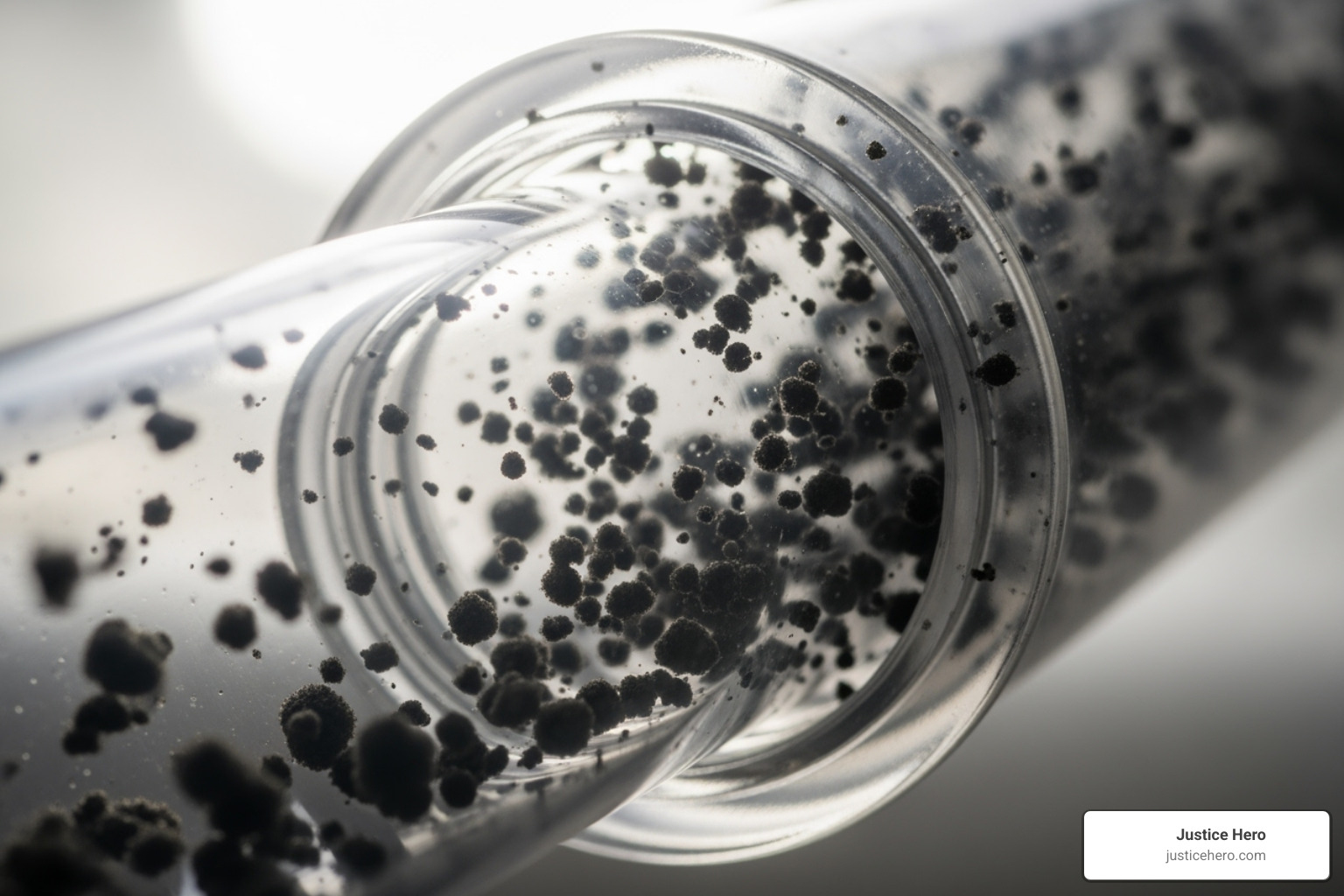
Common immediate complaints included respiratory issues such as irritation of the respiratory tract, inflammation, and asthma exacerbation. Users also experienced headaches, coughing, chest pressure, and sinus infections. The particles and chemicals could lead to broader systemic issues, including kidney damage and liver damage, as these organs work to process and eliminate toxins from the body.
More gravely, the exposure has been linked to various cancers. While the exact causal link is still being investigated, lawsuits allege that the toxic chemicals released by the foam are carcinogenic. Potential cancer types include lung cancer, kidney cancer, liver cancer, and other forms of cancer. The FDA received over 116,000 Medical Device Reports (MDRs) related to the foam issue by April 2024, including 561 reports of death. This highlights the serious nature of the defective devices and the urgent need for affected individuals to understand their rights through the cpap settlement.
There are two separate cpap settlement tracks because Philips caused two categories of harm: financial losses and physical injuries. You may be eligible for one or both.
The economic loss settlement reimburses money spent on defective devices and replacements. The personal injury settlement compensates for health harms (including wrongful death) and funds medical monitoring for those at risk.
Here's how the two settlements compare:
| Feature | Economic Loss Settlement | Personal Injury & Medical Monitoring Settlement |
|---|---|---|
| Purpose | Reimburse device costs, replacements | Compensate for physical harm, future monitoring |
| Total Value | Minimum $613.3 million | $1.1 billion |
| Eligibility | Users who purchased/leased recalled devices | Users who suffered qualifying injuries/death |
| Claim Types Covered | Device payment, return, replacement awards | Personal injury claims, wrongful death, medical monitoring |
| Status | Finalized, payments began June 2024 | Agreed upon, pending court approval, payments expected 2025 |
Participating in one settlement does not prevent you from filing in the other if you qualify.
With a minimum value of $613.3 million, this settlement reimburses people who paid for recalled devices—even if they were not physically injured. You generally need to show you owned or used a recalled device.
It offers three main awards: a Device Payment Award (reimbursing what you paid; amounts vary by model, roughly $45 to $1,500+), a Device Return Award of $100 for devices returned by August 9, 2024, and a Device Replacement Award if you bought a replacement between June 14, 2021, and September 7, 2023. Payments began in June 2024. Details and claim management: Official Economic Loss Settlement Website.
On April 29, 2024, Philips agreed to a $1.1 billion settlement for health harms. About $1.075 billion is allocated for personal injury and wrongful death claims (e.g., cancers, severe respiratory disease, organ damage). Another $25 million funds medical monitoring for users who may face delayed-onset injuries.
This settlement awaits federal court approval, with payments expected in 2025. For broader context, see What is the CPAP Lawsuit?.
If you owned or used a recalled device, you likely qualify for compensation—economic, personal injury, or both. First confirm your device is on the recall list by checking its serial number.

Many people ask, "When will the CPAP lawsuit be settled?" Economic loss payments have started; personal injury payments are expected in 2025. See: When will the CPAP lawsuit be settled?
State statutes of limitations may still apply. Consult a legal professional to protect your rights.
The cpap settlement reflects years of regulatory scrutiny and coordinated litigation.
The FDA classified the recall as Class I and collected extensive Medical Device Reports (MDRs). By April 2024, over 116,000 reports related to foam issues had been submitted, including 561 deaths. Evidence developed in litigation suggested Philips had indications of foam degradation risks years before the 2021 recall, intensifying regulatory oversight.
In January 2024, Philips entered a consent decree with the FDA, halting U.S. sales of affected CPAP devices until compliance and safety are demonstrated—a significant operational and reputational consequence.
Civil cases were centralized in a Multi-District Litigation (MDL) in the U.S. District Court for the Western District of Pennsylvania. As of mid-2024, 829 cases were pending. The MDL structure enabled global negotiations and court oversight of any class or aggregate settlements, paving the way for the current cpap settlement framework.
While Philips denies wrongdoing, the combination of FDA enforcement and MDL pressure produced substantial financial relief and market consequences—clear signals of corporate accountability. If you need help navigating this terrain, a seasoned CPAP Lawyer can align the regulatory record with your medical and legal claims.
I know the cpap settlement can feel complex. Here are concise answers to the most common questions.
Yes. You can still file a claim even if you used an ozone cleaner. While Philips argued ozone could accelerate foam breakdown, investigations showed the PE-PUR foam was inherently prone to degrade. Internal testing indicated a 14x higher degradation rate with ozone, and users were not warned. The settlement does not exclude claims based on ozone use—just be truthful about device maintenance.
No. The settlements address different harms. Participating in the economic loss settlement "does not affect or release any claims for personal injuries or medical monitoring relief." If you later develop qualifying health issues, you may still pursue a personal injury claim.
Awards are typically based on: (1) injury type and severity (e.g., cancers generally receive higher compensation than milder respiratory issues), (2) medical expenses (past and future), (3) impact on daily life and work, and (4) pain and suffering. Wrongful death claims consider funeral costs, loss of companionship, and lost financial support. Based on similar mass-tort resolutions, cancer-related claims in the cpap settlement are often estimated in the roughly $100,000–$500,000 range, depending on individual factors. A court-appointed administrator will evaluate claims and allocate funds to ensure fair distribution.

The Philips cpap settlement—about $1.7 billion in total—offers a real path to recovery for people who purchased defective devices and those who suffered health harms. Economic loss payments are underway; personal injury and monitoring payments are expected in 2025. The key is acting before deadlines.
If you used a recalled device, protect your rights now. Learn what you may qualify for, gather your records, and file the appropriate claims. Learn more about your options in the CPAP lawsuit.
