FREE Case Evaluation: 1-888-887-3117
An abuse settlement is a legal agreement where the responsible party provides financial compensation and other remedies to survivors without going to trial. Here's what you need to know:
Key Components of Abuse Settlements:
Common Settlement Ranges:
Recent high-profile settlements demonstrate the scale of these cases. Los Angeles County approved a record $4 billion settlement for nearly 7,000 child abuse claims, while the Boy Scouts of America reached a $2.4 billion agreement with tens of thousands of survivors.
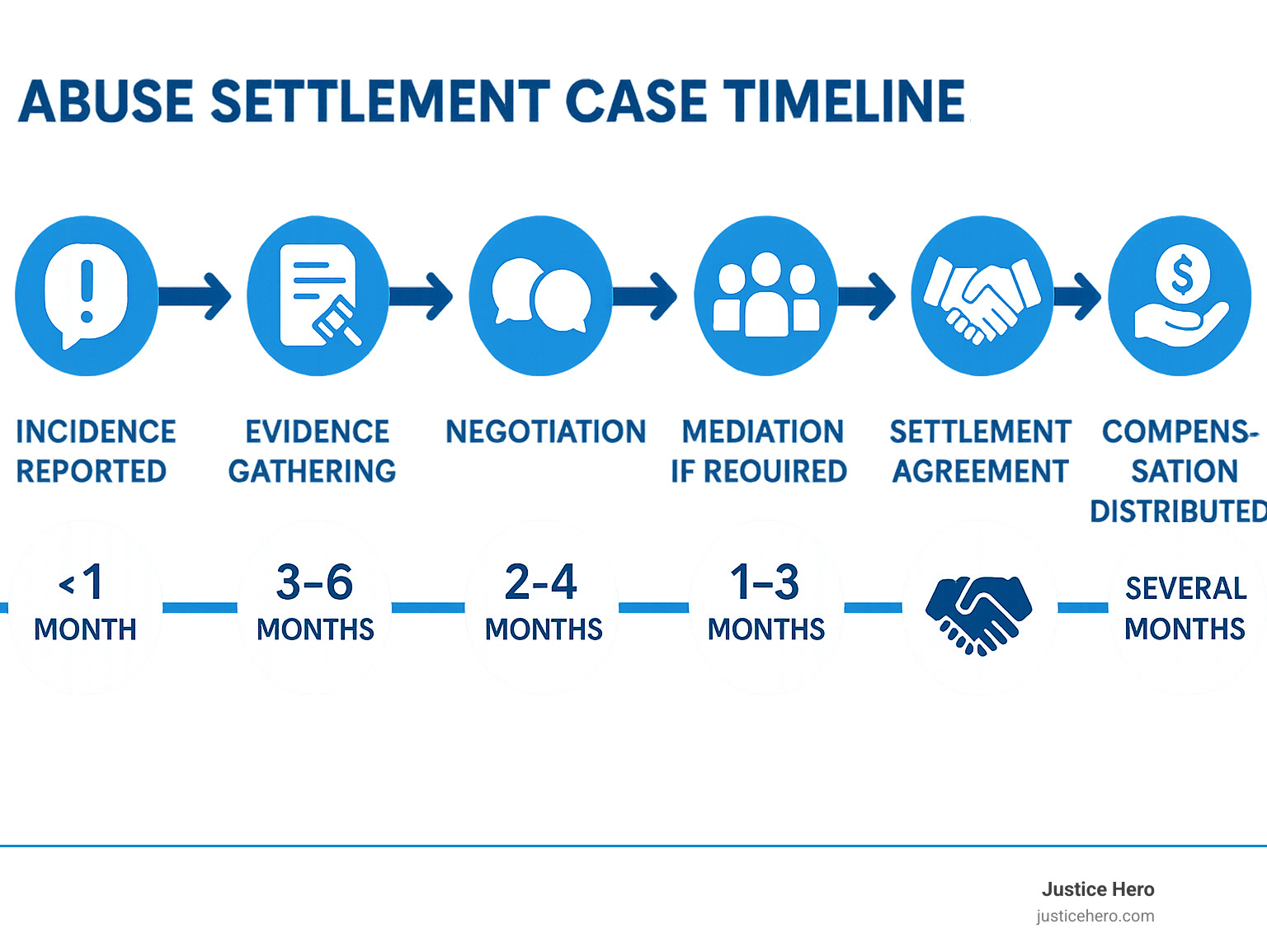
The settlement process typically involves:
Settlements offer survivors a guaranteed outcome without the emotional toll and uncertainty of a lengthy trial. They also create systemic change by holding institutions accountable for their failures. Understanding your options is the first step toward healing and justice.
Abuse settlement vocab to learn:
The value of an abuse settlement is driven by the specific types of harm a survivor has endured.
Sexual abuse, ranging from unwanted touching to forced sexual acts, often causes deep, long-lasting psychological wounds. The resulting trauma can require years of therapy and impact all aspects of a survivor's life.
Physical abuse includes direct bodily harm like hitting or kicking, leaving both physical and emotional scars. Institutional neglect, such as failing to provide medical care, also falls into this category.
Emotional abuse, while leaving no physical marks, can be just as devastating. It includes constant criticism, threats, and manipulation that destroy a person's self-worth.
Many cases are compounded by institutional negligence. Schools, detention center sex abuse facilities, or religious organizations that ignore warning signs or transfer known abusers fail in their duty to protect the vulnerable.
The massive Los Angeles County settlement - $4 billion for nearly 7,000 claims - shows just how widespread institutional failures can be. Many of these cases involved juvenile facilities and foster care homes where children should have been safe.

Several key factors determine why some abuse settlement amounts are higher than others.
The severity and duration of the abuse are foundational. A single incident generally results in a lower settlement than years of abuse. Severe, long-term trauma leading to permanent disability, chronic mental health issues, or an inability to work or maintain relationships commands a higher value.
Strong evidence is critical. This includes medical records documenting injuries, psychological evaluations, and witness testimony. A pattern of similar stories from multiple survivors against the same person or institution can be powerful.
Evidence of institutional cover-ups can dramatically increase settlement values. When organizations knowingly conceal abuse, they face significant financial penalties for their actions.
The legal landscape is also crucial. While statutes of limitations traditionally limited the time to file, many states now have lookback windows that temporarily lift these time bars for old claims. For example, a 2020 California law removed time limits for childhood sexual abuse cases, enabling new lawsuits.
State laws vary significantly in how they handle abuse cases. Some states cap damages, while others allow unlimited compensation. Some have stronger protections for institutional defendants, while others favor survivors.
While every abuse settlement is unique, past cases provide helpful benchmarks for potential compensation.
Most settlements fall into predictable ranges. Cases involving emotional trauma with limited documentation typically settle between $250,000 and $750,000.
When survivors need ongoing therapy and have well-documented psychological harm, settlements usually range from $750,000 to $2 million.
The highest individual settlements - $2 million to $10 million and beyond - typically involve institutional defendants who enabled abuse through gross negligence or cover-ups.
Recent headlines show just how large these settlements can become. LA's approval of $4 billion to settle 'horrific' child abuse claims represents one of the largest abuse settlements in history. The Boy Scouts settlement of $2.4 billion covered tens of thousands of survivors across decades of institutional failure.
Individual payouts within large group settlements vary. For example, in some Canadian cases against religious institutions, awards ranged from $8,000 to $126,000, with the final amount received depending on the institution's ability to pay.
The Federal Indian Day Schools Settlement used a structured approach, with a base payment of $10,000 and additional compensation from $50,000 to $200,000 based on the severity of abuse.
These figures represent real people who held powerful institutions accountable.
Taking the first step toward an abuse settlement can be overwhelming, but understanding the process can help you feel more in control.
Finding the right lawyer is your most important decision. You'll want someone who specializes in abuse cases and truly understands the sensitive nature of your experience. A good attorney won't just know the law – they'll know how to support you through the emotional challenges ahead.
Once you've chosen your legal team, they'll help you with gathering evidence from your past. This might include medical records, therapy notes, school records, or any documentation that supports your claim. Don't worry if you don't have everything – experienced attorneys know how to build strong cases even when records are incomplete.
Filing the lawsuit comes next, where your attorney formally presents your case against the responsible party. From there, most cases move into negotiation between legal teams. Many abuse settlements are actually resolved during this phase, without ever going to court. If direct talks hit a roadblock, mediation with a neutral third party can help both sides find common ground.
Throughout this process, you'll have support in pursuing your abuse claims, and your attorney will guide you through each step at a pace that feels manageable for you.
One of the biggest choices you'll face is whether to accept a settlement offer or take your case to trial. There's no "right" answer that works for everyone – it really depends on what matters most to you and your healing process.
Here's what you need to know about each path:
| Feature | Settlement | Trial |
|---|---|---|
| Outcome | Guaranteed payout (if accepted) | Higher potential award, but no guarantee |
| Timeline | Faster: Typically 12-24 months | Much longer: Can take 3-5 years or more |
| Privacy | Private and confidential (often includes NDAs) | Public record; testimonies are open to the public |
| Emotional Toll | Generally less traumatic, avoids public scrutiny | Emotionally taxing; requires public testimony and cross-examination |
| Control | More control over the outcome | Outcome determined by judge or jury |
| Cost | Generally lower legal expenses | Significantly higher legal expenses |
Most survivors choose settlements because they offer certainty and privacy. You know exactly what you're getting, and you can move forward with your life sooner. The thought of testifying in public about deeply personal trauma understandably feels daunting to many people.
However, some survivors find that going to trial gives them a greater sense of justice and public accountability. If you win at trial, jury awards can be substantially higher than settlement offers, especially when punitive damages come into play.
Your attorney will help you weigh these factors based on your specific situation and what feels right for your healing journey.
Pursuing an abuse settlement has its challenges, but knowing what to expect can help you prepare mentally and emotionally.
The emotional toll is often the hardest part. Sharing your story, even with supportive attorneys, means reliving painful memories. Some days will be harder than others, and that's completely normal. The best legal teams understand this and will work at your pace, connecting you with counseling resources when needed.
Proving historical abuse presents its own problems. Maybe the abuse happened decades ago, or important documents have been lost or destroyed. Don't let this discourage you. Skilled attorneys know how to investigate and build strong cases even when the evidence seems scattered. They can track down witnesses, locate institutional records, and piece together a compelling case from fragments.
Legal complexities around statutes of limitations used to be major roadblocks, but many states have created new opportunities for survivors. California's recent changes, for example, opened doors for many people whose claims were previously time-barred. If you're in California, understanding the specifics of California sex abuse claim laws can be particularly important.
Facing the perpetrator or the institution that failed to protect you can feel terrifying. You might worry about retaliation or having your credibility questioned. Your legal team's job is to shield you from as much direct confrontation as possible while fighting fiercely for your rights.
Thousands of survivors have walked this path before you and found justice on the other side. With the right support system and legal representation, these challenges become manageable steps toward healing and accountability.
While financial compensation is a vital component of an abuse settlement, many survivors also seek institutional accountability. Settlements can force organizations to confront past failures, implement significant policy changes, and commit to preventing future abuse.

A powerful example of this is the "St. John's Solution," a groundbreaking settlement reached between St. John's Abbey and victims of sexual abuse. Beyond financial terms, this settlement emphasized non-monetary aspects, including the establishment of an independent review board. This board, controlled by lay people and survivors rather than the Church hierarchy, was tasked with investigating future allegations, ensuring immediate suspension of accused individuals, and requiring full disclosure of abusers. This model sets a new standard for transparency and external oversight.
Settlements may also require public apologies from institutional leaders, which offers acknowledgment and validation for survivors. Some agreements lead to memorials or educational programs to ensure victims are remembered and lessons are learned.
An effective abuse settlement addresses the long-term emotional, psychological, and financial needs of survivors, providing resources to heal and rebuild a life impacted by trauma.
Beyond the monetary payout for pain and suffering, settlements often cover:
We believe that a truly comprehensive abuse settlement is one that considers the survivor's holistic well-being, paving the way for sustained healing and a renewed sense of purpose. For more information about sexual assault and its broader implications, you can visit more info about sexual assault.
Receiving an abuse settlement brings significant financial decisions. It's normal to feel uncertain about managing this money, which represents compensation for deep personal trauma.
The first big decision you'll face is choosing between a structured settlement and a lump-sum payment. With structured settlements, you receive payments over time - maybe monthly or yearly for a set period. This approach can provide steady income and protect you from spending everything too quickly. It's like having a safety net that ensures you'll have money coming in for years.
On the other hand, a lump-sum payment gives you immediate access to the full amount. This option offers complete control and flexibility - you can invest it, pay off debts, buy a home, or set up your own payment schedule. However, it also requires more discipline and planning to make the money last.

We strongly encourage seeking financial advice from a professional who understands settlement payouts. They can help you create a budget, explore investment options, and plan for both immediate needs and long-term goals. This money is meant to support your healing and future - taking time to plan how to use it wisely is an investment in yourself.
Understanding what you'll owe in taxes on your abuse settlement is crucial for planning purposes. The good news is that much of your settlement will likely be non-taxable.
Under IRS rules, compensation for pain and suffering from physical injury or emotional distress is typically exempt from taxes. This means the portion of your settlement that compensates you for trauma, emotional harm, and physical injuries won't be considered taxable income. This pain and suffering exemption can represent a significant portion of your total settlement.
However, other parts of your settlement might be taxable. Money designated for lost wages or income replacement is usually subject to taxes, since it's replacing income you would have paid taxes on anyway. Punitive damages - money awarded to punish the wrongdoer rather than compensate you directly - are almost always taxable.
Any interest that accumulates on your settlement funds while they're held in escrow or invested will also be taxable income. Because tax laws can be complex and your situation is unique, we recommend consulting with a tax professional who has experience with personal injury settlements. They can help you understand exactly what you'll owe and plan accordingly.
If you currently receive social assistance or government benefits, your abuse settlement could affect your eligibility. Many programs have strict asset limits and income restrictions, so it's important to understand how your settlement might impact these benefits.
The rules vary significantly depending on your location and the specific programs you receive. In some jurisdictions, like Ontario, Canada, there's a helpful $50,000 exemption for pain and suffering awards. This means the first $50,000 of your settlement typically won't count against asset limits for programs like the Ontario Disability Support Program (ODSP policy). However, amounts above this threshold might be considered assets that could affect your eligibility.
Some settlements have special income exemptions due to their nature. Payments from major historical settlements like the Indian Day Schools, Hepatitis C settlements, and various other government compensation programs often have specific rules that protect recipients' benefits. These specific agreements recognize that these payments are compensation for historical wrongs rather than regular income.
You'll need to follow certain reporting requirements when you receive your settlement. Contact the agencies that administer your benefits as soon as you know a settlement is coming. Being proactive and transparent helps you avoid potential problems and ensures you're following all the rules.
Working with both your legal counsel and a financial advisor who understands government benefits can help you structure your settlement to protect your essential support while maximizing the benefit of your compensation.
When exploring an abuse settlement, survivors and their families often have pressing questions. Here are answers to the most common concerns.
The timeline for reaching an abuse settlement varies dramatically based on several key factors.
Out-of-court settlements typically resolve within 12 to 24 months. This process includes evidence gathering, filing, negotiation, and finalizing the agreement. It is often preferred for being faster and less traumatic than a public trial.
Cases that go to trial can take 3 to 5 years or longer, due to findy, depositions, court schedules, and possible appeals.
The timeline is influenced by the availability of evidence, the defendant's cooperation, and the overall complexity of the case. Cases with strong evidence and cooperative defendants resolve faster.
Privacy is a major concern for many survivors, and confidentiality is often achievable in settlement cases.
Private settlements frequently include confidentiality clauses or Non-Disclosure Agreements (NDAs) to keep the terms and identities of those involved private. For instance, when the LDS Church reached settlements with over 100 survivors in California, the agreements were structured to maintain confidentiality for all parties.
If a case goes to trial, court records become public. However, your attorney can request protective orders or ask the court to let you file under a pseudonym to protect your privacy, though this is not guaranteed.
Discuss your privacy concerns with your legal team early so they can work to maximize confidentiality while still pursuing the justice you deserve.
Yes. For many survivors, non-monetary terms are a meaningful part of an abuse settlement that can provide deeper healing and prevent future harm.
These terms can include:
These non-monetary elements reflect a growing understanding that true justice extends beyond financial compensation. They address the need for acknowledgment, accountability, and systemic change that many survivors find essential to their healing journey.
For more comprehensive information about sexual assault and related legal options, you can explore more info about sexual assault.
This guide has covered the key aspects of abuse settlements, from compensation and legal processes to the financial aftermath. Knowledge is power on this complex and personal journey.
Every survivor's path is different. Some find healing through the accountability that comes with a public trial, while others prefer the privacy and certainty of a settlement. Some seek primarily financial compensation to rebuild their lives, while others are driven by the need for institutional change and public acknowledgment of wrongdoing.
What matters most is that you get to choose your path forward.
The numbers we've discussed - from the $4 billion Los Angeles County settlement to individual awards ranging from hundreds of thousands to millions of dollars - represent more than just financial figures. They represent validation, accountability, and the resources needed for healing. But remember, every abuse settlement is unique, shaped by individual circumstances, evidence, and the specific harm endured.
At Justice Hero, we believe that understanding your legal options shouldn't require a law degree. That's why we're committed to breaking down complex legal topics into clear, actionable information. Whether you're just starting to consider your options or you're ready to take action, having the right information helps you make decisions that align with your needs and goals.
If you or someone you care about has experienced abuse, please know that you're not alone. The legal system has evolved to better protect survivors' rights and provide pathways to justice. Taking that first step - whether it's researching your options, consulting with an attorney, or simply acknowledging that what happened wasn't your fault - requires tremendous courage.
Your voice matters. Your experience matters. And you deserve justice.
